

Ever opened your iPhone only to find a gaping hole where your contacts used to be? It’s like showing up to a party and realizing you forgot to invite anyone. Panic sets in as you wonder if your phone’s gone rogue or if you accidentally joined the “No Contacts Club.”
Common Reasons For Missing Contacts
Missing contacts on an iPhone often stem from specific issues. Understanding these can help resolve the problem efficiently.
iCloud Sync Issues
iCloud sync problems frequently cause missing contacts. If iCloud settings aren’t configured correctly, contacts may not sync with the device. Users often forget to enable contact syncing in the iCloud settings. Checking iCloud storage limits can also reveal if space constraints hinder proper syncing. Sometimes, logging out of iCloud and logging back in resolves the issue, triggering a fresh sync. Regular updates to the iPhone’s software can also prevent these problems.
Software Glitches
Software glitches can lead to unexpected contact disappearances. A recent update may introduce bugs, impacting how contacts are displayed. Restarting the iPhone often fixes minor software-related issues. Resetting settings could restore contact visibility without affecting personal data. In some cases, restoring the device from a backup may recover missing contacts. Keeping the iPhone’s software up to date minimizes the risk of recurring glitches.
Troubleshooting Steps
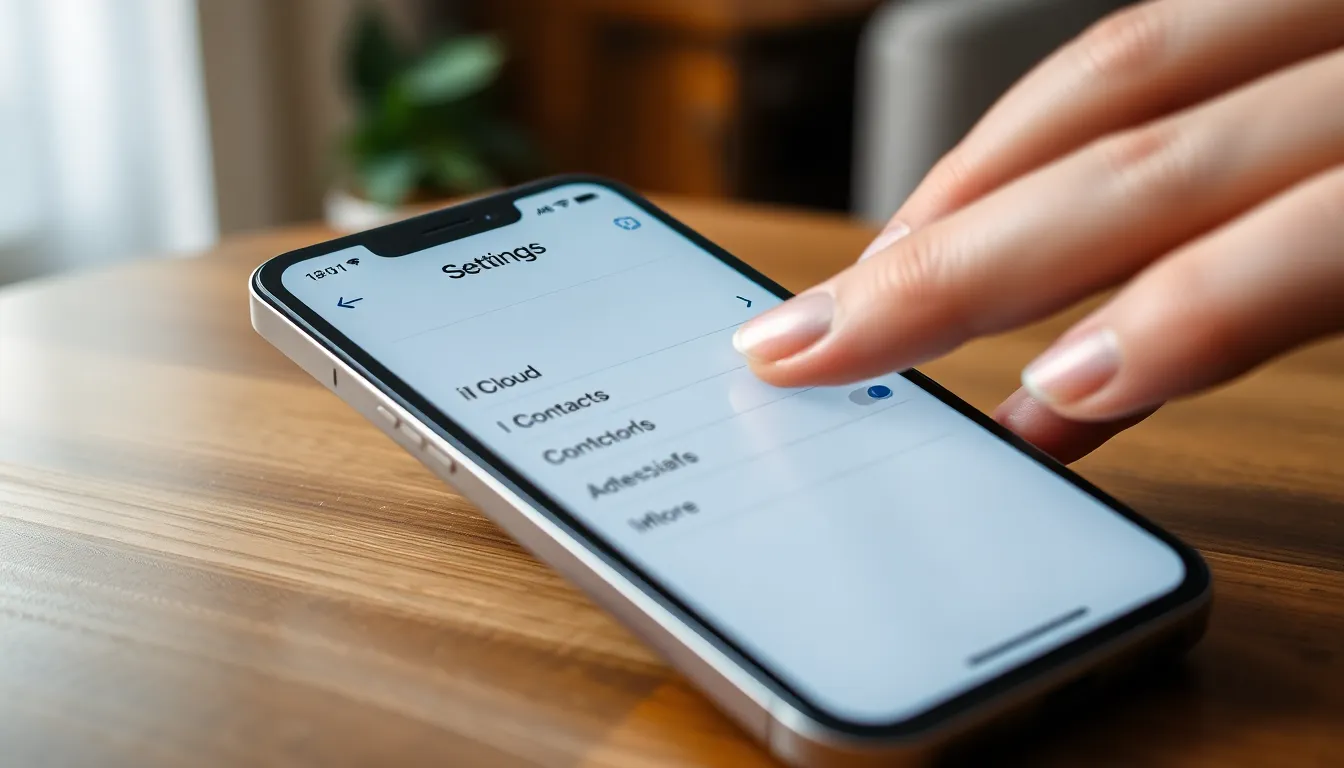
Finding missing contacts on an iPhone can cause frustration. Follow these steps to help restore your contact list.
Checking iCloud Settings
Ensure iCloud is set up correctly. Open the Settings app and tap on your name at the top. Select “iCloud” and check that “Contacts” is toggled on. Confirm whether your device is connected to Wi-Fi for proper syncing. If discrepancies arise, sign out of iCloud and sign back in. After signing in, allow some time for contacts to sync. Sometimes, storage limitations can prevent new data from syncing—check the available storage on your device. If problems persist, consider checking for updates or potentially resetting iCloud settings.
Restarting Your Device
Restarting an iPhone can resolve many issues, including missing contacts. To restart, press and hold the power button until prompted. A simple swipe to power off can refresh the system. Wait a moment before turning it back on; this allows the device to reset applications and services. Upon rebooting, check if contacts reappear. If not, additional steps may be necessary, like resetting network settings, to ensure all connections are in working order. Consistent app performance relies on regular reboots, so consider implementing this step periodically.
Restoring Lost Contacts
Restoration of lost contacts can occur through several effective methods. Utilizing the right tools helps users regain important information quickly.
Using iCloud Backup
iCloud backup offers a reliable way to retrieve missing contacts. Users can restore their device to a previous backup point where contacts were still present. First, accessing Settings, they should tap on their name, followed by iCloud. From there, finding the “Backup” option allows them to confirm a recent backup exists. After verification, selecting “Restore” can bring back contacts in a few steps. It’s essential to remain connected to Wi-Fi during this process to ensure a smooth restoration.
Recovering from iTunes
iTunes provides another option for recovering lost contacts. Users can connect their iPhone to a computer running iTunes and select the device icon. After that, they should choose “Restore Backup” from the Summary panel. Selecting an appropriate backup that contains contacts is vital, as this will restore all data from that point. Performing this process can take some time, depending on backup size. Ensuring the computer stays connected during the restoration prevents interruptions.
Preventing Future Issues
Taking proactive steps can help prevent missing contacts on an iPhone. Regular backups and keeping software updated play crucial roles in ensuring data remains secure and accessible.
Regular Backups
Regular backups are essential for maintaining contact lists. Users can schedule automatic iCloud backups to safeguard their contacts against sudden losses. Accessing iCloud settings allows users to ensure that the “Backup” feature is activated. An alternative method involves using iTunes, where connecting the iPhone to a computer and selecting “Back Up Now” creates a local copy. Storing contacts with both iCloud and iTunes provides an added layer of protection.
Keeping Software Updated
Keeping software updated is vital for optimal performance. Updates often include bug fixes and enhancements that improve syncing capabilities. Users should regularly check for updates by navigating to “Settings,” selecting “General,” and then tapping “Software Update.” Installing the latest iOS version can prevent glitches that may cause contacts to disappear. Maintaining this practice guarantees that all features function correctly, reducing the risk of future issues with missing contacts.
Experiencing missing contacts on an iPhone can be frustrating but understanding the potential causes can ease the process of recovery. By checking iCloud settings and ensuring proper syncing users can often resolve the issue quickly. Regular software updates and automatic backups serve as essential preventive measures against future contact loss.
Taking these proactive steps not only enhances device performance but also provides peace of mind. With the right approach users can restore their contact lists and maintain a seamless experience on their iPhones.